Your air conditioner is running, but the house is not getting any cooler. The fan is spinning, you can hear the outdoor unit, but warm air is what keeps coming out of the vents. This is one of the most common summer service calls we handle in New Jersey. Here are the five things we check first, in the order that catches the problem fastest.
Check the Thermostat First
Before assuming your AC is broken, walk over to the thermostat. Confirm it is set to COOL, not FAN or HEAT. Confirm the target temperature is below the current room temperature. Confirm the fan is set to AUTO, not ON. On AUTO the blower only runs when the compressor is actually producing cool air. On ON the blower runs constantly, which can feel warm between cooling cycles.
If the thermostat has batteries, replace them. A dying battery can leave the screen lit while the signal to the AC unit stops going through. Also check the breaker in your electrical panel. Central AC units have their own dedicated breaker, and if it tripped it might have partially reset. This sounds too simple to matter, but it fixes a real share of the "AC not cooling" calls we run every summer.
The Air Filter Is Blocking Airflow
A clogged filter is the number one reason an AC runs but does not cool. When the filter is packed with dust, air cannot move through the system. The evaporator coil gets too cold. Condensation freezes on it. Ice blocks airflow completely. The compressor keeps running, using electricity, but no cool air reaches your vents.
Turn the AC off. Pull the filter out. If you cannot see light through it, replace it. Turn the AC back on and wait an hour. If cooling returns, you found the problem. Change filters monthly if you have pets or allergies. Every three months minimum for a house without either. It is the single cheapest thing you can do to protect an AC system.
Low Refrigerant Means There Is a Leak
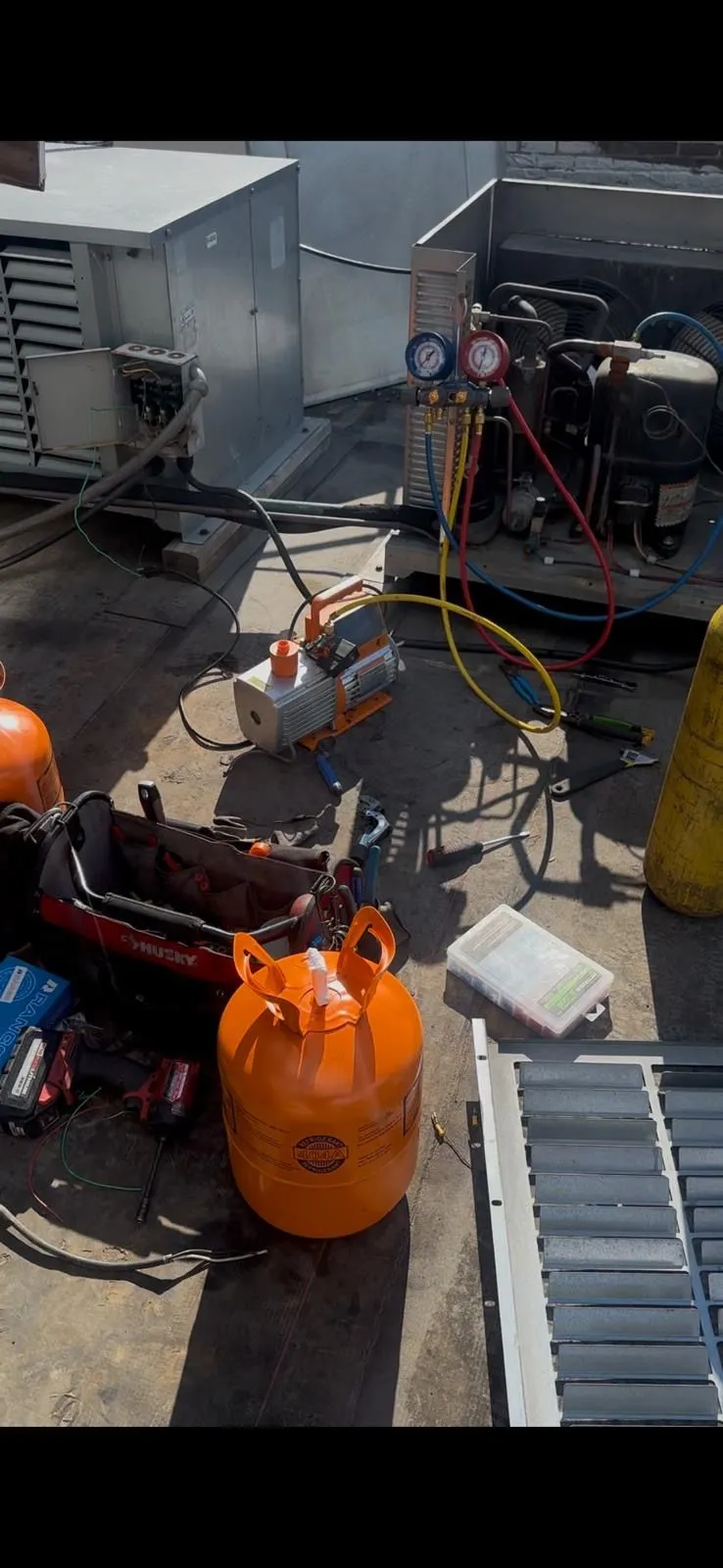
Refrigerant does not get used up over time. It circulates in a closed loop. If your AC is low on refrigerant, that means it is leaking out somewhere. Topping off the refrigerant without finding the leak means you pay for the same fix again in a few months. It also releases refrigerant into the atmosphere, which is illegal under federal law.
Signs of low refrigerant include ice on the copper lines outside, hissing or bubbling sounds near the unit and cooling that gets weaker over time. Refrigerant work requires EPA 608 certification, so it is not a DIY fix. Our licensed AC technicians can find the leak, repair it and recharge the system to the manufacturer specification.
A dirty filter that costs eight dollars can knock out an air conditioner in July. That is why the filter is the first thing we check on every no-cool call.
A Failed Capacitor Stops the Compressor
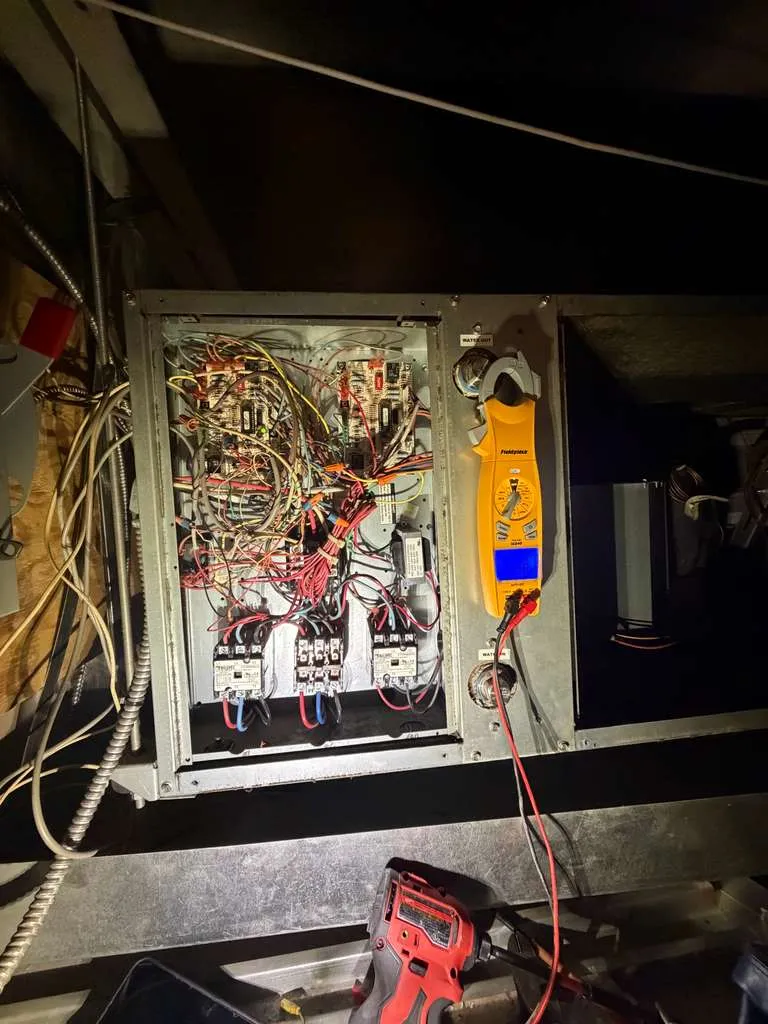
The capacitor is the small cylindrical part that gives the compressor and fan motors the electrical kick they need to start. When a capacitor fails, the fan might still spin (a separate capacitor) but the compressor cannot start. So you get airflow through the vents but no actual cooling because the refrigerant is not circulating.
Symptoms include a humming noise from the outdoor unit, warm air blowing while the indoor fan runs, and the AC taking longer than usual to start after the thermostat calls for cooling. Capacitors are one of the most common summer AC repairs. Replacing one is fast and inexpensive compared to a compressor replacement, which is what happens if a bad capacitor keeps trying to start a locked-up compressor.
The Condenser Coil Is Dirty
The outdoor unit has a large coil that dumps heat from the refrigerant into the outside air. When this coil is packed with dust, cottonwood, grass clippings or leaves, it cannot dump heat efficiently. The compressor works harder. Cooling drops. Eventually the system can trip its own safety limit and shut down entirely.
Rinse the outdoor coil with a garden hose (not high-pressure) from the top down. Clear away any leaves, tall grass or debris that touches the unit. Give it at least two feet of clearance on all sides. If the coil is greasy or heavily fouled with pet hair or industrial dust, that requires a professional cleaning with the correct chemical solution to protect the fins from bending.
When to Call a Technician
Two of the five causes above are homeowner-fixable: thermostat and filter. The other three (refrigerant, capacitor, condenser cleaning) usually need a licensed technician. Here is a quick way to decide.
Thermostat check, filter replacement, gentle coil rinse and clearing debris around the outdoor unit.
Ice on refrigerant lines, humming outdoor unit, hissing sounds or cooling that keeps getting worse.
Burning smell, breaker keeps tripping or the compressor is making grinding noises.
What Happens Next
If you checked the thermostat and the filter and cooling still is not returning, do not keep running the system. Turn it off at the thermostat, let any ice thaw and call for service. Running a struggling AC for hours can turn a small repair into a compressor replacement, which is roughly ten times more expensive.
We provide free written estimates on AC repair, and we tell you upfront if a repair does not make financial sense on an older unit. To schedule a same-day visit, contact our team or call the office. Emergency AC calls are answered 24/7 during the summer.